 Dmytro KlimchukCEO & Founder, mmore.agencyExpertise
- SaaS and B2B SEO
- AI search (GEO and AEO)
- Local SEO and Google Maps
- Content strategy and SEO reporting
Last updated October 13, 2026
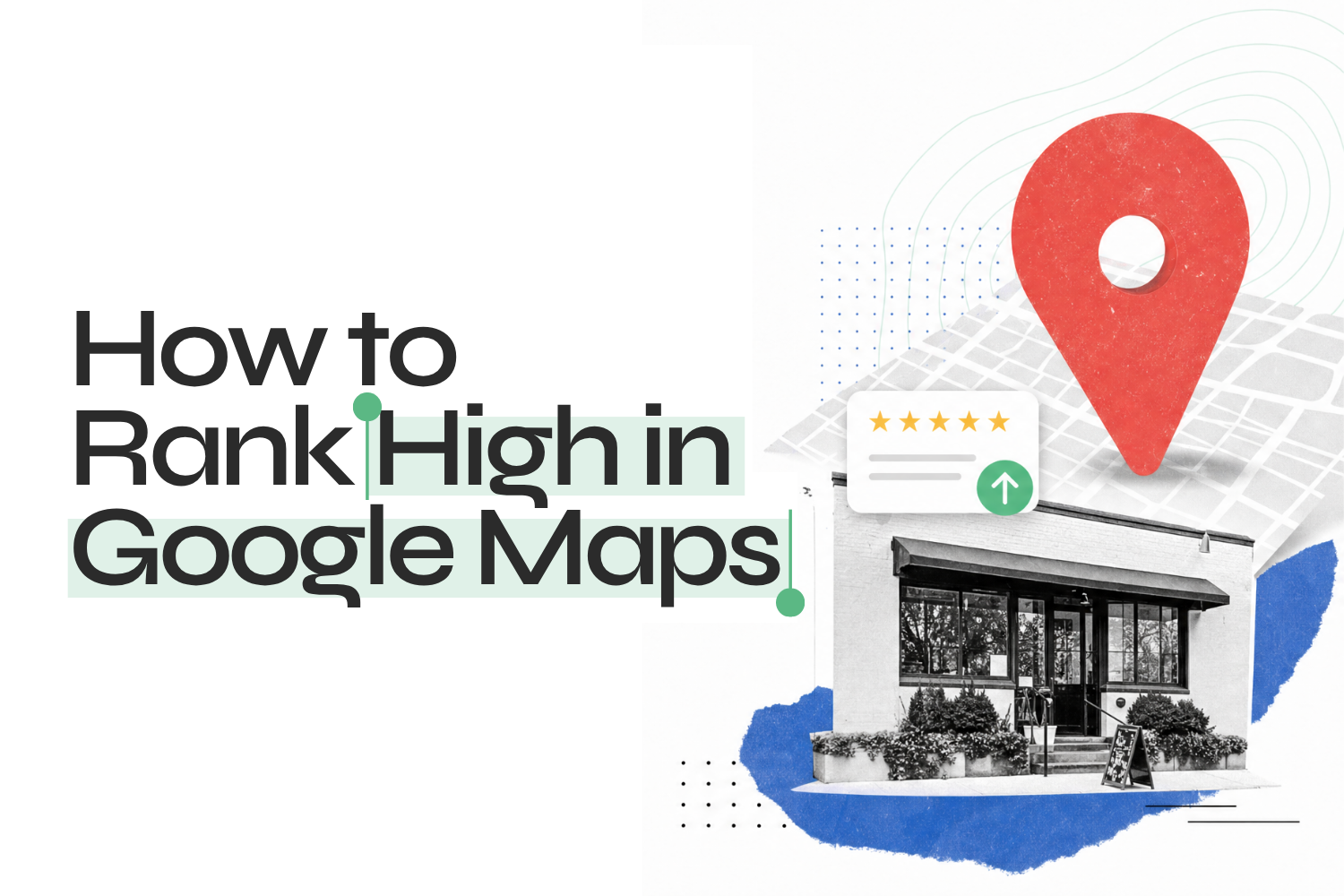
Your Google Maps ranking decides whether a customer calls you or the business down the street. When someone searches “lawn care near me”, Google shows three businesses in the map pack, and those three get the first look.
This guide shows you how to rank higher on Google Maps in 2026. It is built on Whitespark’s 2026 ranking factors report, BrightLocal’s 2026 review survey, and what worked for our own clients in Calgary, Edmonton, Red Deer, Saskatoon and Austin.
It is written for local business owners and marketing managers who want more calls and visits from Maps, not more theory.
Quick answer: To rank higher on Google Maps, claim and verify your Google Business Profile, pick the most accurate primary category, fill in every field, and earn a steady stream of new Google reviews that you reply to. Then back the profile up with a page for each service and city on your website, and consistent listings across the web.
Key takeaways
- Your primary Google Business Profile category is the top Maps ranking factor in Whitespark’s 2026 survey of local SEO experts.
- Distance to the searcher is the second factor, so you rank best near your address and need a plan to reach further.
- 74% of consumers look for reviews written in the last three months (BrightLocal, 2026).
- Keywords in your business name lift rankings, but they break Google’s rules and can get your profile suspended.
- AI tools are now a local search channel: 45% of consumers used ChatGPT or other AI tools for local recommendations in 2026, up from 6% a year earlier.
What decides your Google Maps ranking?
Google ranks businesses on Maps by three things: relevance, distance and prominence. Relevance is how well your profile matches the search. Distance is how far you are from the searcher. Prominence is how well known your business is, based on reviews, ratings and links (Google’s own explanation of local ranking).
Google also says there is no way to pay for a better local ranking. Ads can appear above the map pack, but they do not change your organic position.
Whitespark asks local SEO experts every year which signals matter most. Here are the top 10 Google Maps ranking factors from the Whitespark 2026 Local Search Ranking Factors report (published November 2025). The last column is our own read from running local campaigns.
| Rank | Ranking factor | Can you control it? |
|---|---|---|
| 1 | Primary Google Business Profile category | Yes, in your profile settings |
| 2 | Distance from the searcher to your address | No |
| 3 | Keywords in the business name | Only through a real rebrand |
| 4 | Physical address in the city being searched | Partly, through where you open locations |
| 5 | Business is open at the time of search | Yes, through your listed hours |
| 6 | High star rating (4 to 5 stars) | Yes, over time |
| 7 | Address shown on the profile (not service-area only) | Depends on your business type |
| 8 | Additional categories | Yes, in your profile settings |
| 9 | Number of Google reviews with text | Yes, over time |
| 10 | Correct map pin placement | Yes, in your profile settings |
Four of the top ten factors are settings inside your Google Business Profile. That is why the plan below starts there.
See Where You Rank on Google Maps
How to rank higher on Google Maps: 9 steps
These nine steps run from the quickest fixes to the longer-term work. The first five cost nothing and cover most of the top ranking factors.
1. Claim and verify your Google Business Profile
A verified Google Business Profile is the starting point for any Maps ranking. Search your business name on Google Maps. If a listing exists, claim it. If not, add it through Google Business Profile Manager.
Verification proves you own the business, and Google lists it as its first tip for improving local ranking.
2. Choose the right primary category
Your primary category tells Google what your business is, and it is the top ranking factor in the 2026 Whitespark report. Pick the most specific category that matches your main service, such as “Lawn care service” instead of “Landscaper” if lawn care is what you sell.
Then add secondary categories for other services you really offer. Look at which categories the top three businesses in your area use. Our guide to local SEO competitor analysis shows how to find them.
3. Complete every field in your profile
A complete profile gives Google more ways to match you to a search. Fill in your hours, holiday hours, services, products, attributes, service areas and business description.
Hours matter more than many owners think. Being open at the time of search is a top five factor, so a business listed as closed at 7 pm loses evening searches to competitors that show as open.
Keep your name, address and phone number identical on your website, Google, Bing Places, Apple Business Connect, Yelp and industry directories.
4. Keep your business name clean, even though keywords work
Keywords in the business name are the third strongest Maps ranking factor in 2026. That is exactly why so many profiles read like “Best Plumber Vancouver 24/7”.
Do not do it. Google’s business name guidelines require your profile name to match your real-world name, and extra words in the name can get your profile suspended. A suspended profile disappears from Maps entirely, which costs far more than the ranking boost was worth.
The legitimate route is a real rebrand. If the keyword is on your signage, website and invoices, it can be on your profile too.
If a competitor is keyword stuffing, you can suggest an edit to their name on Google Maps. If Google accepts it, their boost goes with it.
5. Get recent reviews and reply to every one
Reviews affect both your ranking and whether people call. Review count is a top ten signal, and a 4 to 5 star rating sits at number six.
Customers want fresh reviews. In BrightLocal’s 2026 Local Consumer Review Survey, 74% of people said they look for reviews written in the last three months, and 68% will only use a business rated four stars or higher.
Replies count too. 80% of consumers are likely to use a business that responds to all of its reviews, and half are put off by templated replies.
We use a simple rule with clients called the 3R Review Rule:
- Recent: ask for a review after every job, so new ones arrive every week.
- Replied: answer every review within a day or two, good or bad.
- Real: write each reply by hand and mention the service or neighbourhood when it fits naturally.
6. Add real photos and post updates
Photos show customers what to expect and show Google the business is active. Google recommends adding photos and videos to your profile.
Upload real photos of your team, vehicles, storefront and finished work, not stock images. Publish an update, offer or project photo through Google Posts every week or two, so the profile never looks abandoned.
7. Build a website that backs up your profile
Your website confirms to Google what your profile claims. Link your profile to the most relevant page, not always the homepage. A business with several locations should link each profile to its own city page.
Give each core service and each city you serve its own page with local details, photos and reviews. Yard Dawgs reached #1 after we built location-specific landing pages for each of its cities, first four and now seven (more on that below).
Add LocalBusiness schema, embed a Google Map on your contact page, and make sure the site loads fast on phones. If you suspect deeper problems, check these signs your website’s SEO isn’t working.
8. Earn local citations and links
Citations and links build prominence, the third pillar of Google’s local ranking. A citation is any mention of your name, address and phone number on another site, such as Yelp, the Better Business Bureau or a local chamber of commerce.
For Yard Dawgs, we built more than 100 local citations and earned backlinks from trusted sources. Local sponsorships, supplier pages and local news mentions work especially well, because competitors cannot easily copy them.
9. Track rankings across your whole service area
Your Maps ranking changes from street to street, so a search from your office shows only one point. A business can be #1 next door and invisible five kilometres away.
Use a local rank grid tool such as Local Falcon or BrightLocal to see your position across a grid of points around your location. Review it monthly, along with calls, direction requests and website clicks in your Google Business Profile performance report.
How do you rank on Google Maps in a city where you have no office?
You rank best near your verified address, because distance and a physical address in the searched city are both top five ranking factors. A business based in Calgary will struggle to reach the map pack for searches made in Edmonton.
There are three honest options:
- Open a real, staffed location in that city and give it its own verified profile.
- Set service areas on your profile so Google knows where you work. This helps relevance, but it will not beat distance on its own.
- Win the regular results below the map pack with a strong city page. That is how service-area businesses get found where they have no address.
Avoid virtual offices. Google’s guidelines say they are not eligible unless they are staffed during business hours. Our multi-location SEO service is built for brands with several locations or service areas.
Proof: how two of our clients reached the top of the map pack
Here is what these steps looked like in two real campaigns.
Yard Dawgs Lawn Care: four cities in 90 days
Yard Dawgs was a lawn care company serving Calgary, Edmonton, Red Deer and Saskatoon. They came to us in December with one goal: rank #1 in all four cities by March, before their April to June peak season. Today it serves 7 cities and ranks in Google’s top 3 in all of them.
We combined Google Business Profile optimization, location-specific landing pages, 10+ new articles a month and over 100 local citations and backlinks. Within 90 days they reached page one, landed in the top three of the local pack, and grew the number of keywords in the top three positions by 65%. The search “red deer lawn care services” climbed from deep in the results to #1.
We were stuck on page 2, and Dmytro and his team got us to #1 for all our top high-volume, high-quality keywords in just a few months.
Liam Sunstrum, Vice President, Yard Dawgs Lawn Care
Read the full Yard Dawgs local SEO case study.
ATX Jewelry Exchange: #1 for “jewelry buyers near me” in Austin
ATX Jewelry Exchange buys gold, diamonds and watches in Austin, Texas. Competitors were capturing the searches of customers who were ready to sell.
We improved their Google Business Profile, added structured data, built 9 new service and location pages and published SEO articles every month. They reached #1 in the local pack, ranked #1 for searches like “jewelry buyers near me” and “sell gold Austin”, and grew organic traffic from about 30 to 130+ clicks a day. See the ATX Jewelry Exchange case study.
Both clients needed the same two things: a profile Google trusts, and a website that proves it in every city they serve.
How do AI tools like ChatGPT choose local businesses?
AI assistants recommend local businesses using the same kinds of signals Maps uses: business listings, reviews and websites. When someone asks ChatGPT, Gemini or Perplexity for the best roofer in Edmonton, the answer is built from sources that already mention and review that roofer. In our check of 60 AI answers for local searches, only 39% of ChatGPT’s picks were also in the Google Maps top 3.
This channel is growing fast. In BrightLocal’s 2026 survey, 45% of consumers used ChatGPT or other AI tools for local recommendations, up from 6% the year before, and 82% read AI-generated review summaries.
To show up in AI answers as well as on Maps:
- Keep your details identical on Google, Bing Places and Apple Business Connect, since different AI tools draw on different sources.
- Ask for reviews that mention specific services and neighbourhoods, which gives AI summaries something concrete to repeat.
- Publish clear service and city pages that answer common questions directly.
- Earn mentions in local news, best-of lists and trusted directories.
We cover the bigger picture in our guide to traditional SEO vs LLM optimization, and it is part of our AI search optimization service.
What are the most common Google Maps ranking mistakes?
The most common mistakes are a vague primary category, a keyword-stuffed name, outdated hours and ignored reviews. Each one is easy to fix, and each costs rankings every day it stays.
- Choosing a broad category like “Contractor” when a more specific one exists.
- Adding keywords or city names to the business name.
- Showing a home address for a service-area business. Google’s guidelines say to hide it.
- Letting reviews go quiet for months.
- Using a virtual office or mailbox as the business address.
- Linking every profile to the homepage instead of a matching city or service page.
Should you do Google Maps SEO yourself or hire an agency?
Doing it yourself works for one location in a quiet market. If you have staff to take it on, SEO training for your team shortens the learning curve. An agency makes sense in crowded categories, across several cities, or when results are needed before a busy season.
| Option | Best for | Trade-off |
|---|---|---|
| Do it yourself | One location with time to manage reviews and posts every week | Slow learning curve, and website work is easy to miss |
| Freelancer | Small budgets that need a one-time profile cleanup | Usually covers the profile, but not content, citations or tracking |
| Agency | Competitive markets, several locations, or a deadline like peak season | Higher monthly cost, so ask for reports and real case studies |
We are a Calgary SEO company working with clients across Canada and the US. Our local SEO services cover your profile, website, citations and reporting in one plan.
Get a Free Google Maps Audit
We’ll check your Google Business Profile, reviews and local pages, and show you what’s keeping you out of the top three.
Frequently asked questions
How long does it take to rank higher on Google Maps?
In our experience, most businesses see movement within 4 to 12 weeks of fixing their profile, and stronger gains within 3 to 6 months. Quick fixes like the primary category and hours can help within weeks. Yard Dawgs reached page one in four cities within 90 days and now ranks in Google’s top 3 in all 7 of its cities. Our real local SEO timelines from a 7-city client show how fast each city moved.
Can you pay Google to rank higher on Google Maps?
No. Google states that there is no way to request or pay for a better local ranking. Ads can appear above the map pack, but they are labelled as sponsored and do not change your organic position.
Why is my business not showing on Google Maps?
The usual causes are an unverified or suspended profile, the wrong primary category, or searching from too far away. Check that your profile is verified and live in Google Business Profile Manager. Then search from your own neighbourhood or use a rank grid tool, because rankings change with distance.
Do Google reviews help your Google Maps ranking?
Yes. The number of Google reviews with text and a high star rating are both top ten Maps ranking factors in Whitespark’s 2026 report. Recent reviews also matter to customers, since 74% look for reviews from the past three months.
Does Google Maps SEO help with ChatGPT and other AI search tools?
Yes, in part. AI assistants draw on listings, reviews and websites, so a strong, consistent profile makes your business easier to recommend. Clear service pages and mentions on trusted local sites improve your AI visibility further.
What should you do next?
Start with steps 1 to 5 this week. They cost nothing, and together they cover most of the top Google Maps ranking factors.
If you would rather have experts handle it, mmore can review your profile, website and competitors and show you exactly what is holding your Maps ranking back. Get your free audit.
About the author
CEO & Founder, mmore.agency
Dmytro has spent 12+ years in SEO. He founded mmore.agency to give SaaS, B2B and local businesses SEO that ties to revenue: priorities picked from real data every month, content that Google and AI tools cite, and reports that show what actually moved.